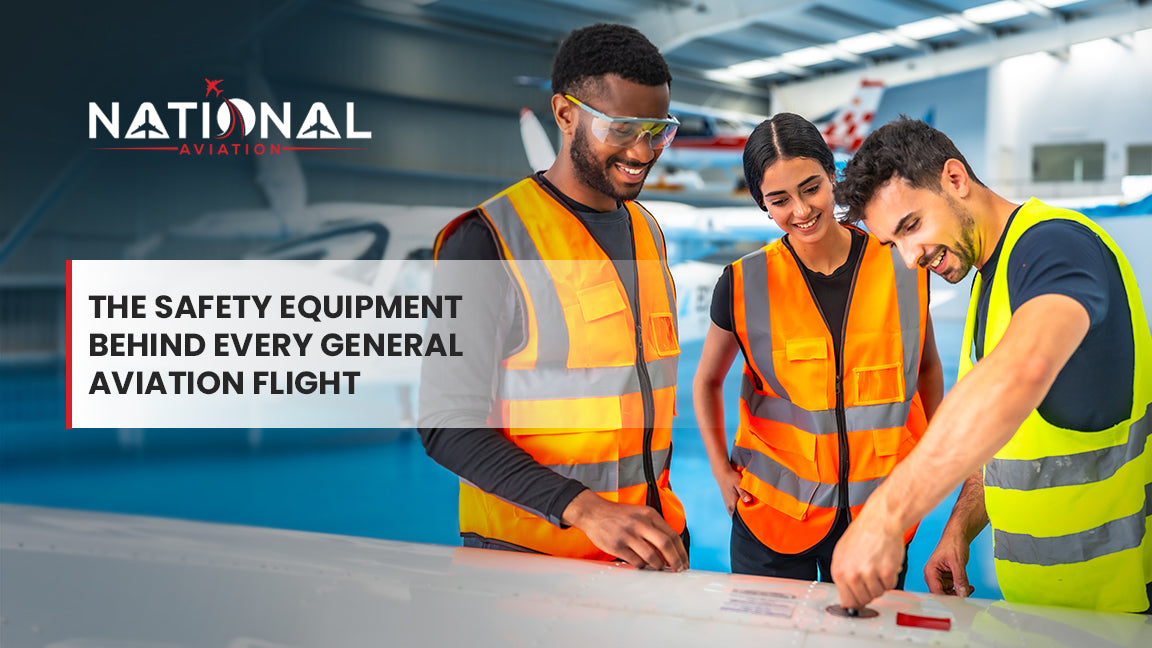
Think about what it takes for a flight to happen. Before any aircraft leaves the ground, someone has inspected the engine, checked the fuel, cleared the ramp, and briefed the crew. General aviation runs on the work of pilots, mechanics, fuelers, and ground crews, and those people face real hazards every day.
GENERAL AVIATION IN THE UNITED STATES
|
19,000+ Landing facilities nationwide |
200,000 Active GA aircraft, responsible for 77% of all U.S. air traffic |
$219B Annual economic impact of GA |
|
600,000 Certificated pilots in the U.S. Airmen Registry |
145M Passengers transported annually in GA aircraft |
90,000+ Certificated flight instructors across the U.S. |
Source: FAA Administrator's Fact Book; GAMA Contribution of General Aviation to the U.S. Economy
If you work the line at an FBO, turn wrenches in a maintenance shop, fuel aircraft, or instruct from the right seat, jet blast, fuel vapors, noise, and moving machinery are part of your shift. Below is a look at the safety products National Aviation carries for each of those hazard areas, and why each one matters.
1. Head and Eye Protection
It does not take a dramatic incident for a head or eye injury to happen in a hangar. A panel edge at the wrong height, a drop from a shelf above an engine bay, a splash of hydraulic fluid during a line break. These are ordinary moments in an aviation maintenance environment, and they are exactly why ANSI-rated hard hats and Z87.1 safety eyewear exist. Match your protection to the task: wraparound safety glasses for general maintenance, chemical splash goggles wherever Avgas, Jet-A, Skydrol, or solvents are involved, and a hard hat for any overhead work or construction activity on the ramp.
2. Hearing Protection
Hearing loss from noise exposure is gradual, painless, and invisible until the damage is done, and once it happens no surgery or hearing aid can bring it back. Every active GA ramp exceeds OSHA's 85 dB action level during engine start and run-up. A turboprop at ground idle produces close to 100 dB at 50 feet. A jet at takeoff power pushes past 140 dB. If you work the ramp, the flight line, or the hangar, consistent hearing protection prevents permanent damage that no medical treatment can reverse.
3. Respiratory Protection
Aviation fuel vapors are invisible, and Skydrol often isn’t detected until exposure has begun. Inhalation hazards in GA maintenance are real and cumulative fuel vapors during servicing, hydraulic mist, isocyanate paints, epoxy resins, and carbon fiber dust.
N95 or P100 disposables address particulate hazards from sanding and grinding, while a reusable half-face respirator with OV/P100 cartridges covers most fuel and solvent vapors. Extended spray painting or fuel cell entry requires a PAPR or supplied-air system. Respirator selection depends on the task, and OSHA 1910.134 mandates a written respiratory protection program wherever respirators are used.
|
|
A note on cartridge service life Organic vapor cartridges provide no visible sign when they stop working. Replace them on a scheduled basis based on the chemicals and concentrations in your specific work environment. Do not rely on detecting odor. By the time you can smell breakthrough, exposure has already happened. |
4. Hand, Body and Foot Protection
The ground operations at FBOs and MROs run at a pace that leaves little room for improvised protection. Start with your hands: the glove material has to match the chemical. Nitrile for Jet-A and Avgas. Neoprene for Skydrol. PVC for battery acid and caustic splash. The wrong glove degrades in minutes and provides no useful barrier. Beyond gloves, ANSI 107 Class 2 or Class 3 high-visibility clothing is required if you work in aircraft movement areas. NFPA 2112-compliant flame-resistant coveralls matter most during fueling and hot work near open fuel systems, where ordinary synthetic workwear can melt into a burn wound in a flash fire scenario. EH-rated steel or composite toe boots are standard PPE on any active ramp.
5. Fall Protection
OSHA requires fall protection above four feet, no exceptions. Maintenance heights vary from ~6 ft on smaller aircraft to 20+ ft on large jets, and all fall under the rule. A full-body harness spreads forces across the body to reduce injury risk. A self-retracting lifeline reduces free-fall distance compared to a traditional lanyard. Both require a rated anchor point. All three components must be in place before working at height.
6. Hazmat and Spill Response
A fuel spill on a GA ramp is not an unusual event. With more than 19,000 landing facilities across the country, many operating without dedicated hazmat personnel, your ability to respond quickly depends entirely on having the right supplies staged before an incident occurs. Petroleum-only spill kits with hydrocarbon-specific sorbent pads and booms belong at every fuel farm, on every fuel truck, and in every maintenance vehicle. An ANSI Z358.1-compliant emergency eyewash station must be within 10 seconds of travel from any area where corrosive chemical contact is possible. These are baseline requirements for any GA facility handling fuel and chemicals, not optional upgrades.
7. Fire Safety
Aviation fuel fires move fast. Matching the right extinguisher to the right fire class is the difference between effective suppression and a wasted agent at exactly the wrong moment. Halon 1211 and CO2 extinguishers are the right choice for aircraft interiors and avionics bays because they suppress the fire without leaving residue that damages sensitive equipment. AFFF foam extinguishers cover the large-volume Class B fuel fire risk at fuel farms and ramp areas. Dry chemical extinguishers are effective but cause avionics damage, so they belong in areas away from aircraft. Every extinguisher needs monthly visual inspection and annual maintenance. Position them where you can actually reach them in the first seconds of an incident.
8. Signage, Barricades and Lockout/Tagout
OSHA cites failure to control hazardous energy as one of the leading causes of serious injury and death in maintenance environments. If you work on GA aircraft, a lockout/tagout program under OSHA 1910.147 is the procedure that stops an aircraft from moving, pressurizing, or energizing while you are working inside it. A complete LOTO station kit makes that program accessible and consistent across every shift. Beyond energy control, clear signage does the work of a person who is not there: trespass warnings, tamper prohibitions, CCTV notifications, and hazard boundary markings communicate the rules of the environment to everyone who enters it. Traffic cones and retractable belt stanchions establish the aircraft exclusion zones and FOD-control perimeters that keep people and equipment where they belong.
General aviation powers 1.1M jobs and moves 145M passengers yearly. National Aviation provides bulk pricing, fast parts access, PPE planning, and centralized buying for large teams.
Always follow your operation's safety program, applicable OSHA standards, and your aircraft manufacturer's service instructions for PPE requirements."
Shop All Aviation Safety and PPE Products
Free shipping on orders over $350. Same-day processing.