In general aviation, reliability begins with routine maintenance — and as the aircraft fleet ages, that routine is more important than ever. Across the United States, the average piston-engine airplane is now over 30 years old, according to FAA data on the age profile of the general aviation fleet. Older airframes, engines, and accessories bring with them the realities of metal fatigue, corrosion, and component wear that demand proactive attention, not just compliance checks.
That's where a solid maintenance program comes in. Whether you operate an MRO station, manage a flight school, or maintain your own aircraft, knowing exactly when and how to inspect critical systems, such as oil, filters, and spark plugs, can mean the difference between smooth operations and costly downtime.
At National Aviation, we specialize in aviation supplies and pilot gear that keep general aircraft performing safely and efficiently. From oil filters and spark plugs to tools, torque wrenches, and inspection cameras, we help maintenance professionals and private pilots alike source everything they need, all in one trusted online store.
This guide breaks down essential maintenance checklists for aging piston aircraft, based on FAA, Lycoming, and Continental recommendations, so you can service engines confidently and keep your aircraft flying longer.
1. Why Aging Piston Aircraft Need Extra Attention
Older aircraft require more frequent inspection of wear-prone systems such as ignition, fuel, and oil. The FAA's Best Practices Guide for Maintaining Aging GA Airplanes highlights corrosion, fatigue, and electrical degradation as top issues.
Adopting a proactive maintenance culture, logging component age, upgrading materials, and adjusting inspection intervals helps reduce downtime and preserve value.
2. Engine Oil and Filter Maintenance
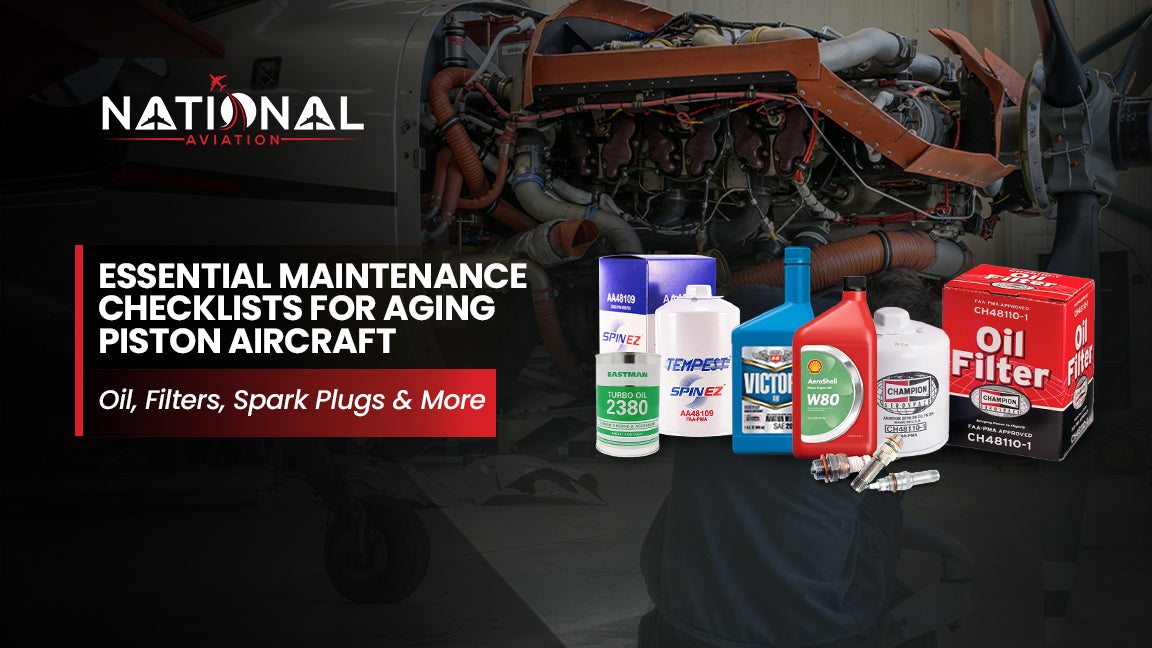
Oil is the lifeblood of piston engines. Both Lycoming SB 480 and Continental's M-0 manual call for oil changes every 50 hours (filtered) or 25 hours (screened), or every four months—whichever comes first. Following these OEM intervals helps extend engine life and protect against internal corrosion.
Checklist
- Warm-drain the oil and inspect for metallic particles.
- Replace or clean the filter/screen per OEM specs.
- Refill with approved multi-grade or ashless-dispersant oil.
- Log engine time, oil type, and inspection results.
3. Cylinder Compression and Leak-Down Checks
Routine compression checks reveal mechanical wear that can lead to rough running or power loss, a common issue in higher-mileage engines. Early detection saves labor and protects engine value.
Checklist
- Conduct compression tests at annual or 100-hour inspections following FAA AC 43.13-1B procedures.
- Record readings for each cylinder and compare against manufacturer limits (typically ≤ 25% differential).
- Investigate any abnormal pressure drop by checking valve seating, exhaust leaks, or ring wear.
Shop for Maintenance Tools at National Aviation Quality: Tooling for Engine Service Tasks.
4. Spark Plugs and Ignition System
Rough running and high CHTs often result from spark-plug fouling or worn leads. Champion and Tempest recommend cleaning and rotating plugs every 100 hours or annually.
Checklist
- Remove and clean all plugs.
- Check gap, torque, and heat range.
- Inspect ignition leads for cracking or resistance.
Shop Champion & Tempest Spark Plugs Online — Get your supply online at National Aviation
5. Air and Fuel Filtration
Dirty induction filters and contaminated fuel screens can starve engines of air or clog injectors. Replace and inspect both components at every annual or 100-hour inspection.
Checklist
- Inspect the induction filter for dirt, insects, or damaged seals.
- Clean or replace fuel filters/screens.
- Examine hoses for dry rot or corrosion.
Shop Air & Fuel Filters at National Aviation — Filters, gaskets, and hoses for every engine type.
6. Safety Checks and Hardware Inspection
Loose or corroded hardware can lead to vibration, leaks, or control issues. Consistent hardware checks are among the easiest and most effective safety habits for any mechanic or pilot.
Checklist
- Inspect safety wire on oil filters, drain plugs, and magnetos for proper twist and direction.
- Verify torque on oil-cooler lines, exhaust clamps, and engine-mount bolts per OEM specs.
- Examine control linkages and hinge pins for corrosion or play.
- Replace worn hardware using FAA-approved AN bolts, nuts, and cotter pins.
Keeping older piston aircraft airworthy depends on disciplined, checklist-driven maintenance. Consistent oil and filter service, ignition care, fuel-system cleanliness, and hardware inspection reduce downtime, prevent corrosion, and protect your investment.
When it's time to restock, shop online at National Aviation, your trusted online store for certified parts and tools that meet FAA and OEM standards.
Ready to equip your hangar? Browse our comprehensive collection of General Aviation Maintenance Supplies and keep your aircraft airworthy with confidence.