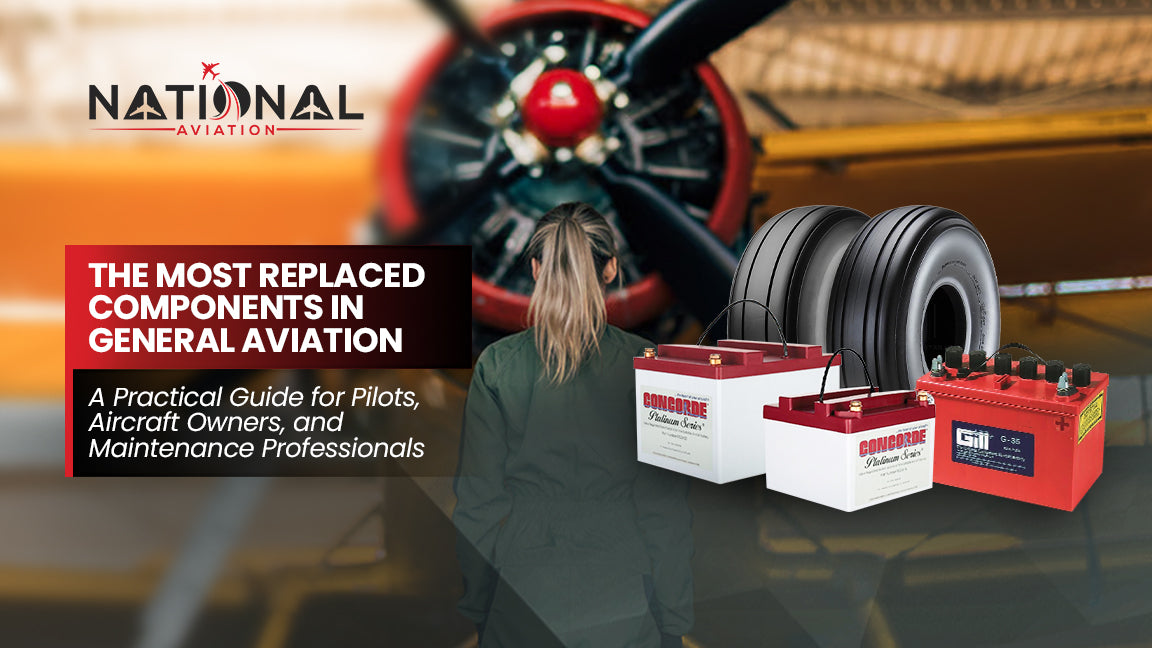
Aircraft batteries, tires, and brakes quietly perform the most challenging work on a general aviation aircraft, and they are also the components that are replaced most frequently. They sit right at the intersection of safety, reliability, and day-to-day operating costs, which is precisely why MRO stations, pilots, and aviation hobbyists keep coming back to them during annual inspections, 100-hour checks, and pre-buy evaluations. For a store like National Aviation, that constant need translates into year-round demand for dependable parts and the tools to install them safely.
Why are these components replaced so often?
Every flight puts the landing gear and brake system under heavy stress as the aircraft touches down, decelerates, and taxis. Guidance on general aviation maintenance highlights that wheel, tire, and brake replacement is routine work within landing gear systems, not an exception reserved for unusual events. Experience in GA maintenance also shows that even well-maintained aircraft require some form of preventive or minor maintenance roughly every few dozen flight hours, with more comprehensive checks at 100-hour and annual intervals, when worn consumables are most often discovered and replaced.
Batteries, meanwhile, degrade steadily with calendar time, cycling, and exposure to temperature. They are part of the core electrical power system, and replacement of primary batteries is explicitly listed in maintenance guidance and electrical-power system documentation as a recurring task tied to airworthiness and dispatch reliability. The combination of mechanical wear on tires and brakes, plus chemical aging in batteries, explains why these items top the list of parts that MROs plan for and stock in depth.
Batteries: Heart of the electrical system
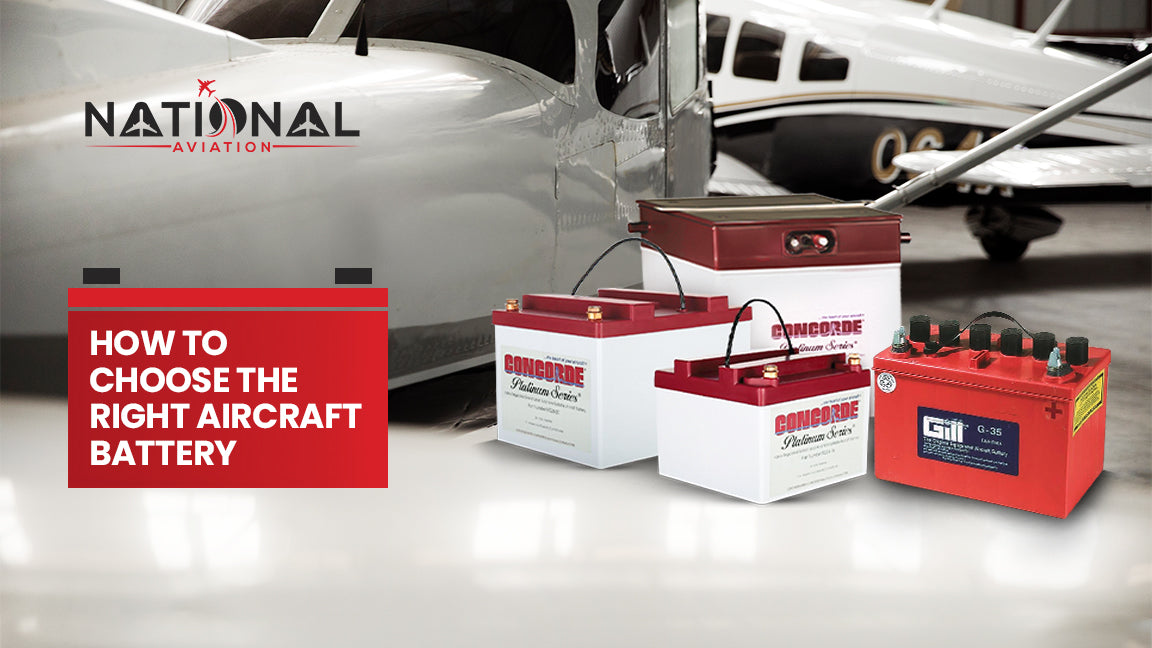
On a small GA aircraft, the battery is critical for starting, powering essential avionics on the ground, and providing a safety margin if the alternator fails in flight. Aviation safety and maintenance publications describe how batteries gradually lose capacity and how a unit that can no longer reach an acceptable percentage of its rated capacity after proper charging is considered unserviceable and must be replaced. This is why aircraft owners and mechanics invest time in regular performance checks and why they look for reputable brands with strong reliability records when it is time to remove and replace.
Because the battery is part of the broader electrical system, maintenance must comply with both regulations and the aircraft's manuals. Documentation such as maintenance manuals and illustrated parts catalogs spells out which battery models are approved, how they are installed, and what tests are required before returning the aircraft to service.
Tires: Where the aircraft meets the runway
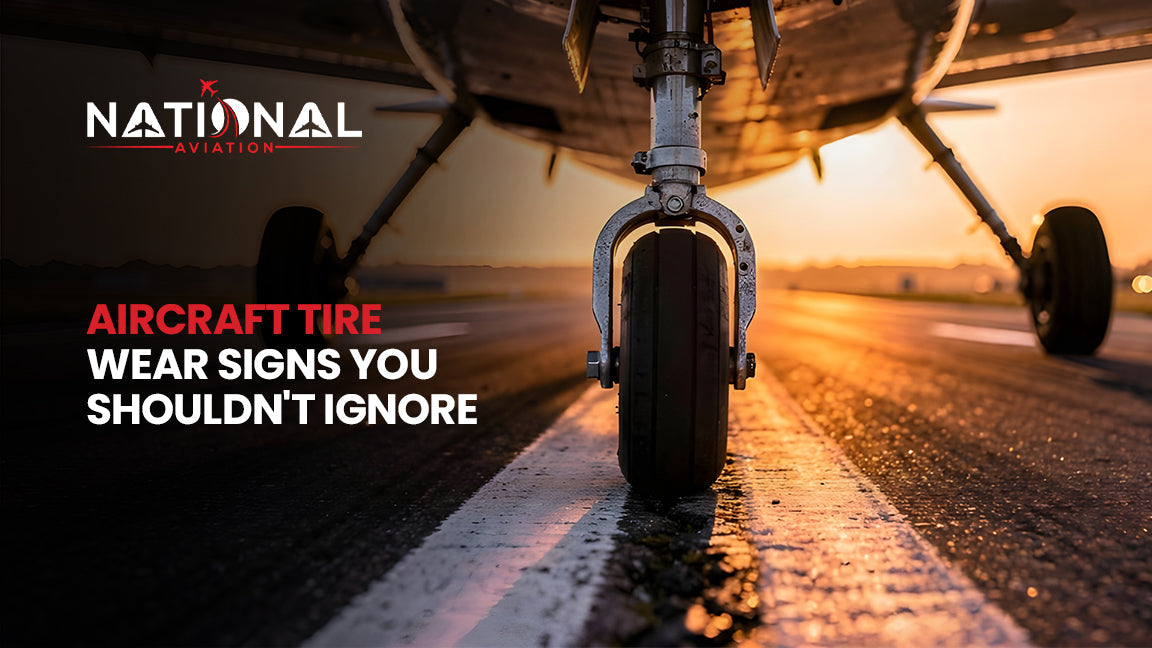
Among landing gear components, tires and tubes are among the most frequently replaced parts because they absorb repeated takeoff and landing cycles, as well as friction and side loads from crosswind landings and tight turns. Maintenance lists for landing gear systems explicitly include wheel and tire replacement as standard tasks, reflecting that tread wear, flat‑spotting, and sidewall damage are expected outcomes of normal operations. Training aircraft that fly many short legs or perform frequent touch-and-goes see exceptionally rapid tire wear, and operators plan their maintenance budgets accordingly.
Tire replacement is not just about swapping rubber; it is a controlled maintenance action that demands proper jacking, safe handling of the aircraft, and adherence to procedures. The relevant manuals specify the approved sizes, ply ratings, and inflation pressures, as well as the methods for inspecting wheels, bearings, and tubes during disassembly and reassembly. That makes National Aviation's combination of tires, tubes, jacks, wheel chocks, and shop tools particularly valuable, because it supports the entire task from safely lifting the aircraft to re-torquing the wheel and returning it to service.
Brakes: Critical Components That Demand Attention
Brake pads and discs work under extreme conditions, converting kinetic energy into heat every time the aircraft lands and slows down. Maintenance resources for GA aircraft explain that brake wear is influenced by factors such as runway length, aircraft weight, pilot technique, and environmental conditions. Additionally, they note that inspection and replacement of brake components are recurring maintenance items closely linked to landing gear tasks. Worn pads, leaking seals, or heat-damaged discs reduce braking performance and can compromise directional control, particularly during short-field operations or in crosswinds.
Because brakes are safety-critical, the procedures and limits are derived directly from approved documentation. Mechanics follow the maintenance manual for pad thickness limits, torque values, and post-maintenance checks, ensuring that logbooks and records accurately capture the work in line with regulations. For owners and pilots, understanding that brakes are "consumables with consequences" reinforces the value of investing in high-quality pads, seals, and hardware, along with the right tools for inspection and replacement.
What this means for National Aviation customers
For MRO stations, flight schools, and individual owners, planning around these high-turnover components is a crucial part of maintaining aircraft airworthiness and availability. Guidance on maintenance planning emphasizes proactive forecasting and scheduling, which includes anticipating replacements for life-limited items and consumables before they unexpectedly cause a plane to be grounded. Stocking dependable batteries, tires, tubes, brake components, and the associated support equipment allows operators to align their maintenance actions with inspection intervals and avoid extended downtime.
National Aviation is positioned to support that lifecycle end‑to‑end: from the battery that keeps the electrical system ready, to the tires that touch down on every flight, to the brakes that bring the aircraft safely to a stop. By offering quality components backed by solid technical information and a respect for the underlying maintenance documentation, the store becomes more than a catalog; it becomes a trusted partner in the continuous work of keeping general aviation aircraft safe, compliant, and ready to fly.
Explore the general aviation supplies available at National Aviation and order the parts you need with confidence.